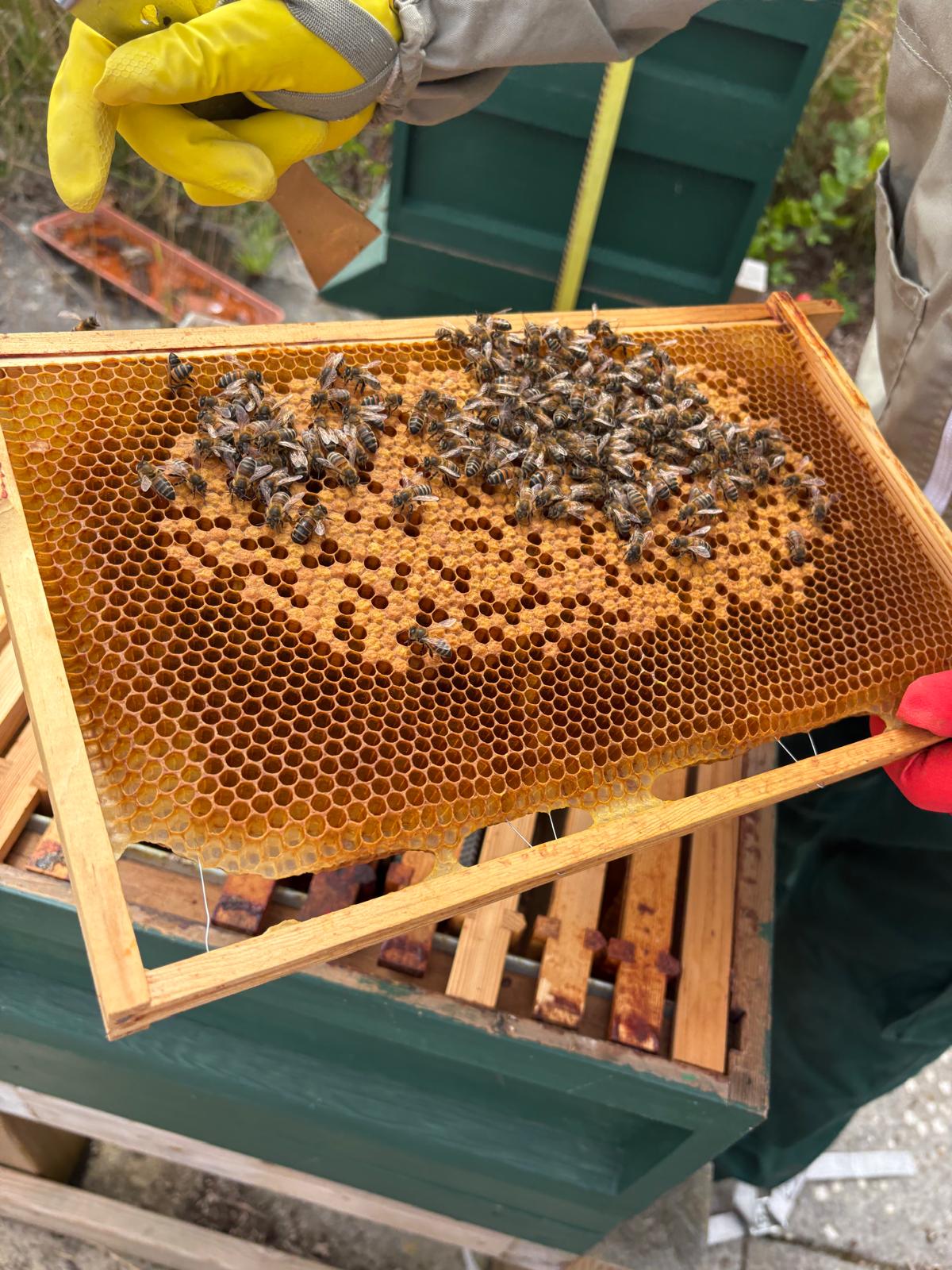
Today we carried out an inspection of our second, smaller hive with one main goal in mind: to find our young queen and give her her official colour mark for 2026.
Queen bees are colour-coded using an internationally recognised five-year system based on the last digit of the year they were born. This makes it much easier for beekeepers to identify a queen’s age at a glance. For queens born in 2026, the correct marking colour is white. A tiny dot of non-toxic paint, or a specialist queen marking pen, is carefully applied to the top of her thorax. The process is quick, harmless, and makes future hive inspections much easier.
Despite taking our time, the queen proved elusive and managed to avoid being spotted during today’s inspection. That said, we weren’t disappointed for long because the hive gave us all the reassurance we needed that she is present, healthy, and doing exactly what she should be.
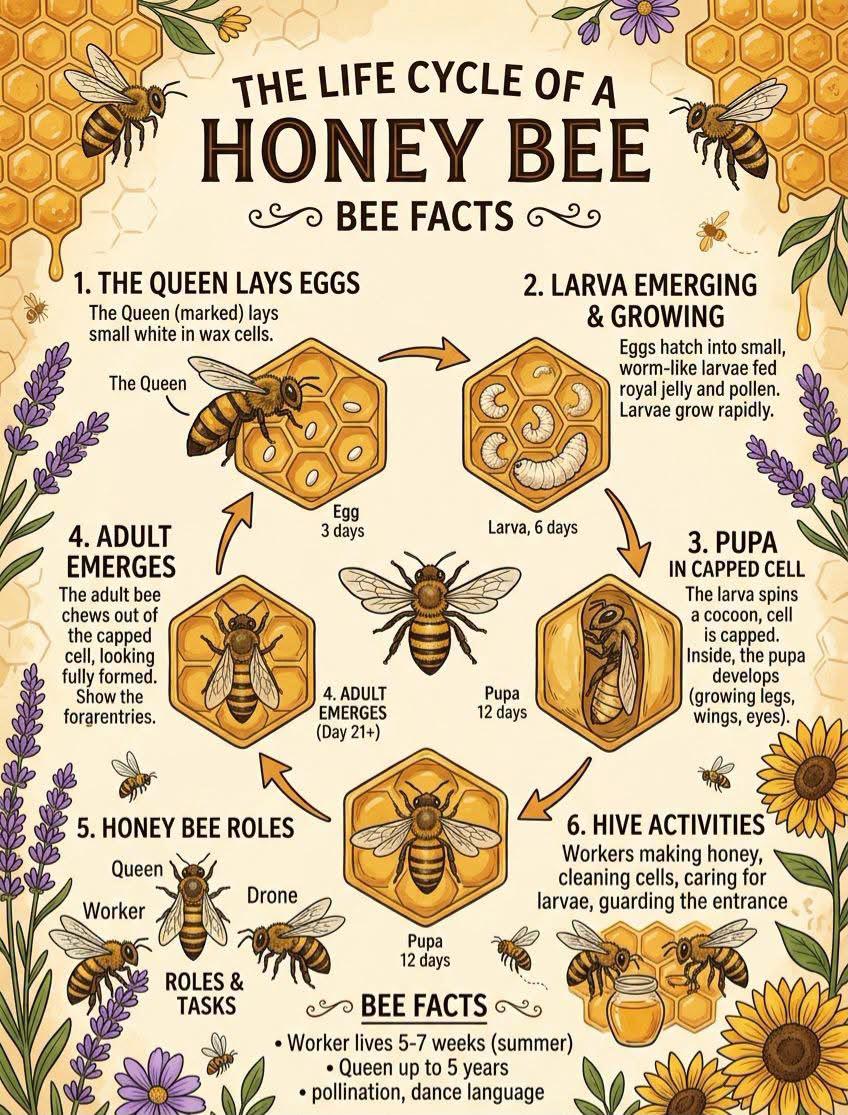
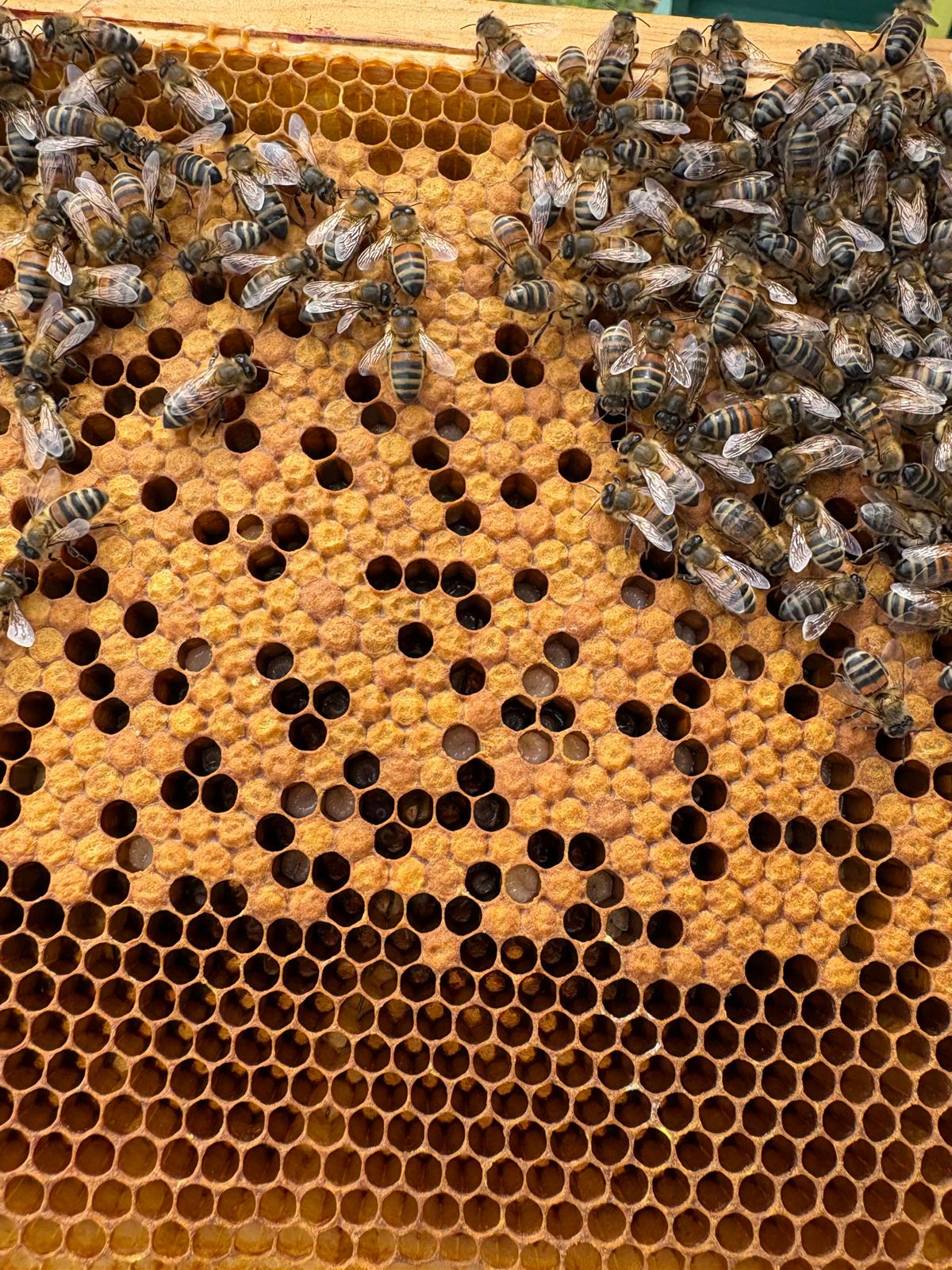
The good news is that we didn’t actually need to see her to know she’s been hard at work. We found both larvae and capped brood, which is exactly what we were hoping for. That’s clear evidence that our young queen has successfully mated and is laying eggs, and the colony is beginning to grow.
It’s still very early days for this hive, but it’s encouraging to see the colony getting established. With a bit more time and favourable weather, we hope the population will continue to build steadily over the coming weeks. Hopefully, on our next inspection, the queen will be a little less camera-shy and we’ll finally be able to give her that white 2026 mark!
P.S. If you zoom in on the honeycomb pattern, you can see the larvae!