Over the last couple of weeks, there has been plenty happening in and around our hives. We’ve been keeping a close eye on both colonies as the summer weather continues, and we’ve managed to complete a couple of important jobs that should give our bees the best chance of staying strong as we head towards autumn and, eventually, winter.
Most importantly, we’ve finally managed to locate both of our queens!
Finding and Marking Both Queens
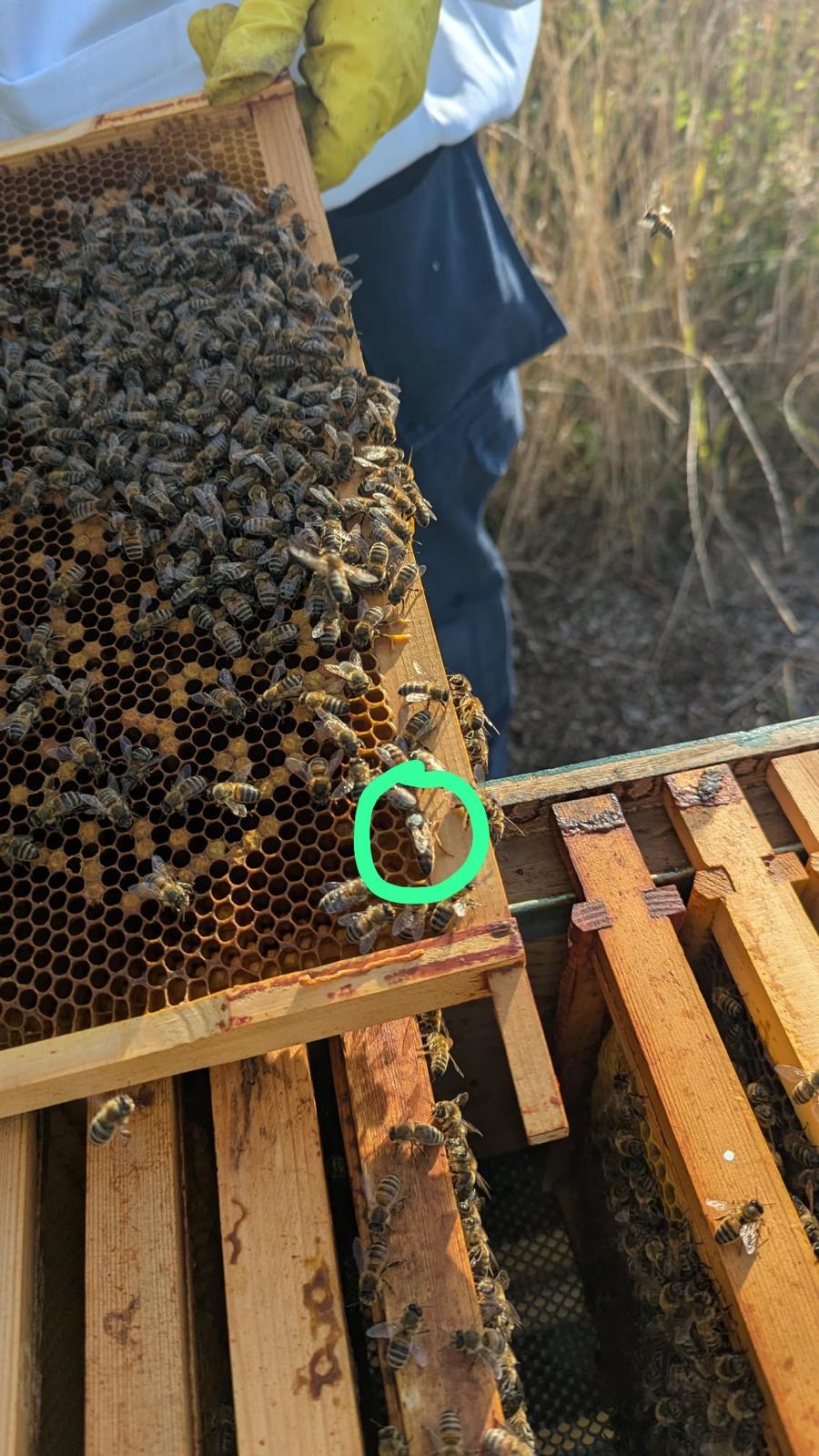
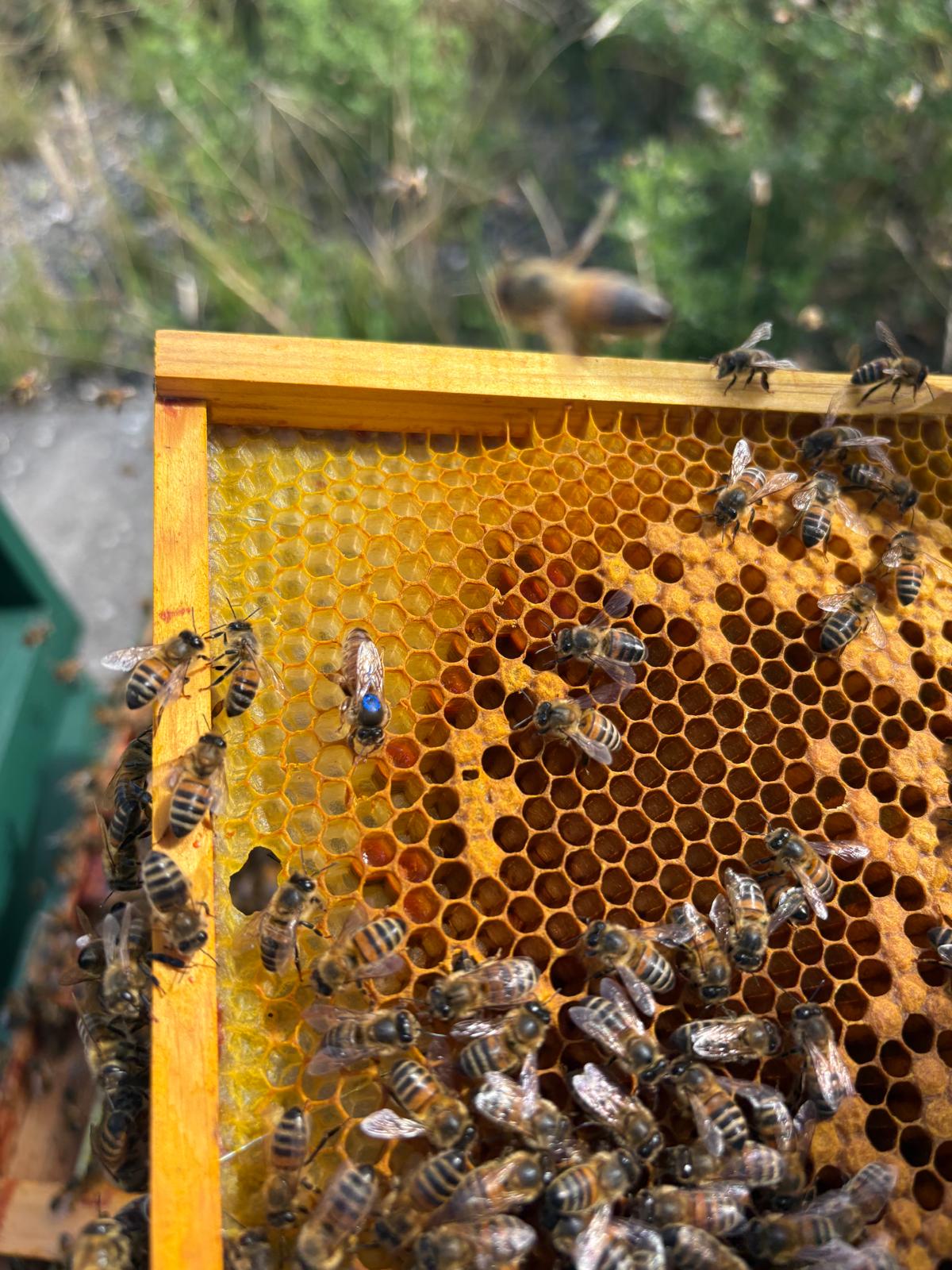
Finding a queen can sometimes be easier said than done, particularly when the colony is busy and there are thousands of bees moving around the frames. After some careful searching, we were pleased to locate both queens.
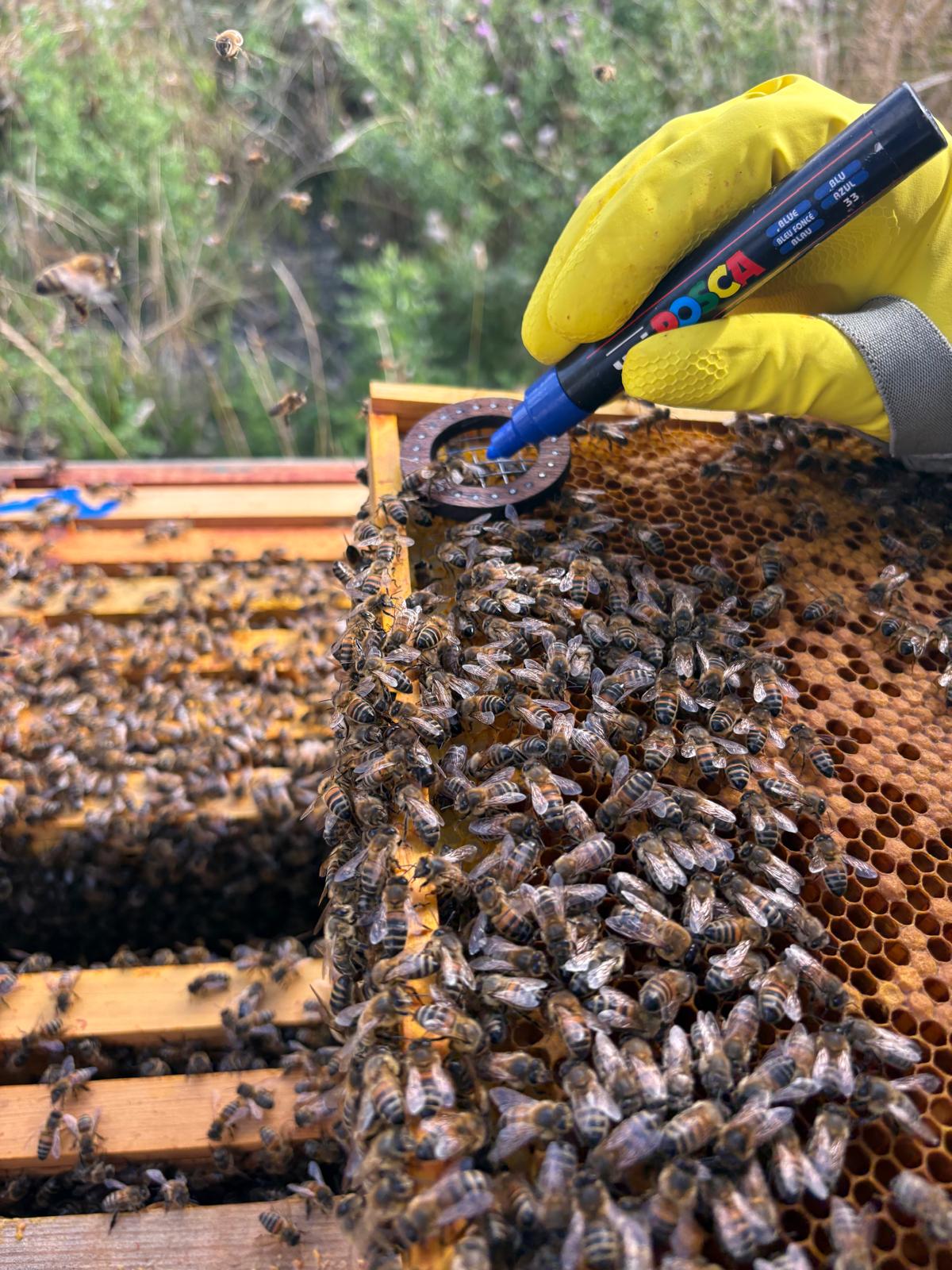
The young queen in our smaller second hive has been marked white for 2026. Marking the queen makes her much easier to spot during future inspections and also gives us a quick indication of her age.
We also found the queen in our original first hive and have re-marked her blue for 2025. The coloured marking helps us identify her quickly amongst all the other bees and makes keeping track of our queens much easier from one inspection to the next.
Having both queens accounted for is particularly reassuring as we continue to monitor the colonies and prepare them for the months ahead.
A Summer of Hot Weather and Less Nectar
The recent very hot weather has brought its own challenges for the bees.
With temperatures climbing, many of the wildflowers that would normally provide an important source of nectar are now starting to die back. For honey bees, this means fewer flowers to visit and less natural nectar available to bring back to the hive.
We’ve been trying to give them a little helping hand where we can.
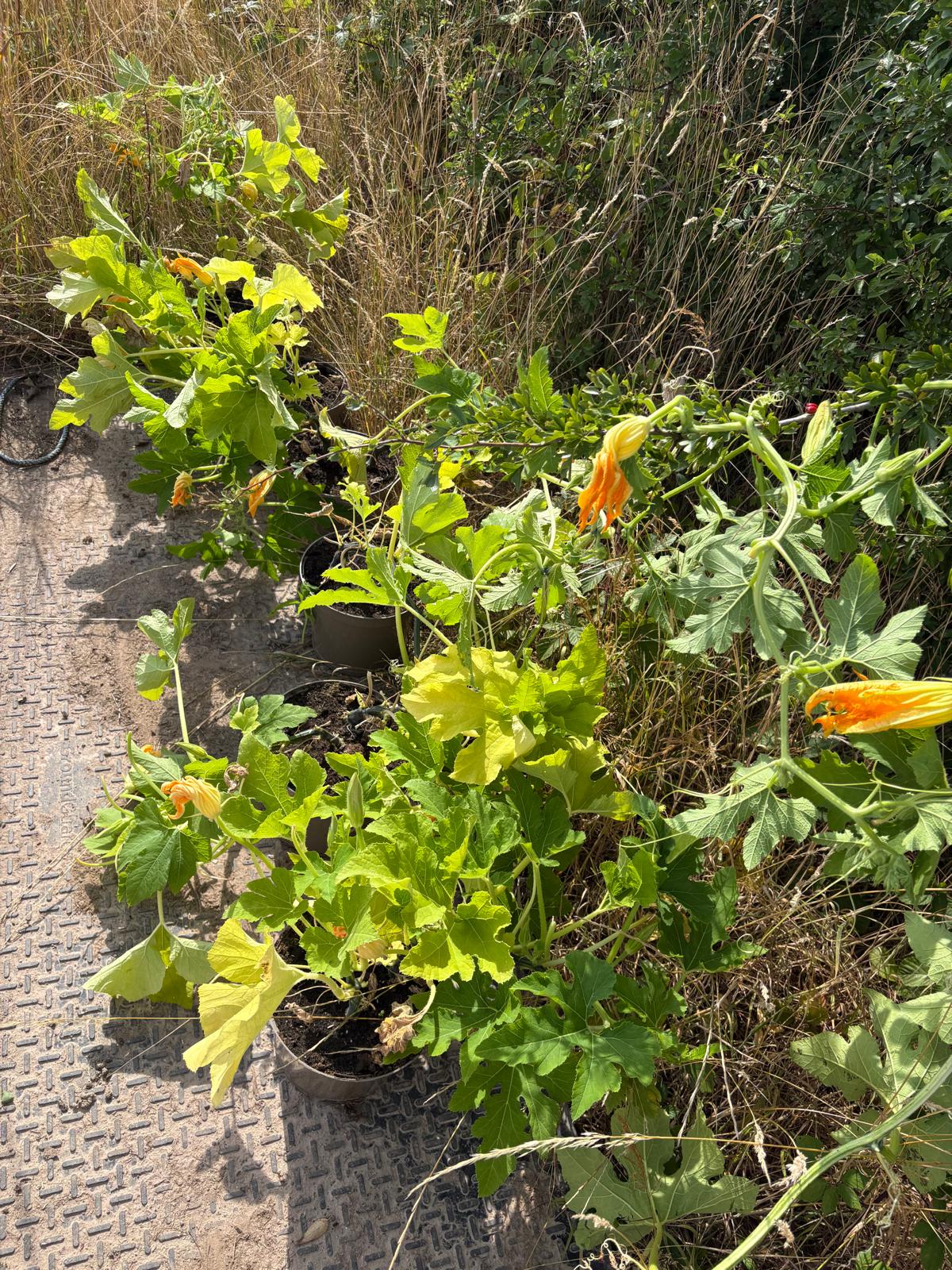
A few pots of flowering pumpkin plants that we’ve grown in our greenhouse have been left nearby. Pumpkin flowers are particularly attractive to bees and provide a good source of sweet nectar, giving our bees another useful food source while some of the wildflowers are struggling in the heat.
We’ve also topped up the water tray nearby, making sure there is a reliable source of fresh water available. Bees need water for a number of reasons, particularly during hot weather, so providing a safe water source can be a simple but useful way of helping them through periods of high temperatures.
Giving Our Smaller Hive a Helping Hand
Our smaller, second hive is naturally the colony we’re keeping the closest eye on as we look towards winter.
A strong colony going into the colder months has a much better chance of successfully getting through winter, so we’ve taken some steps to give the smaller hive a boost.
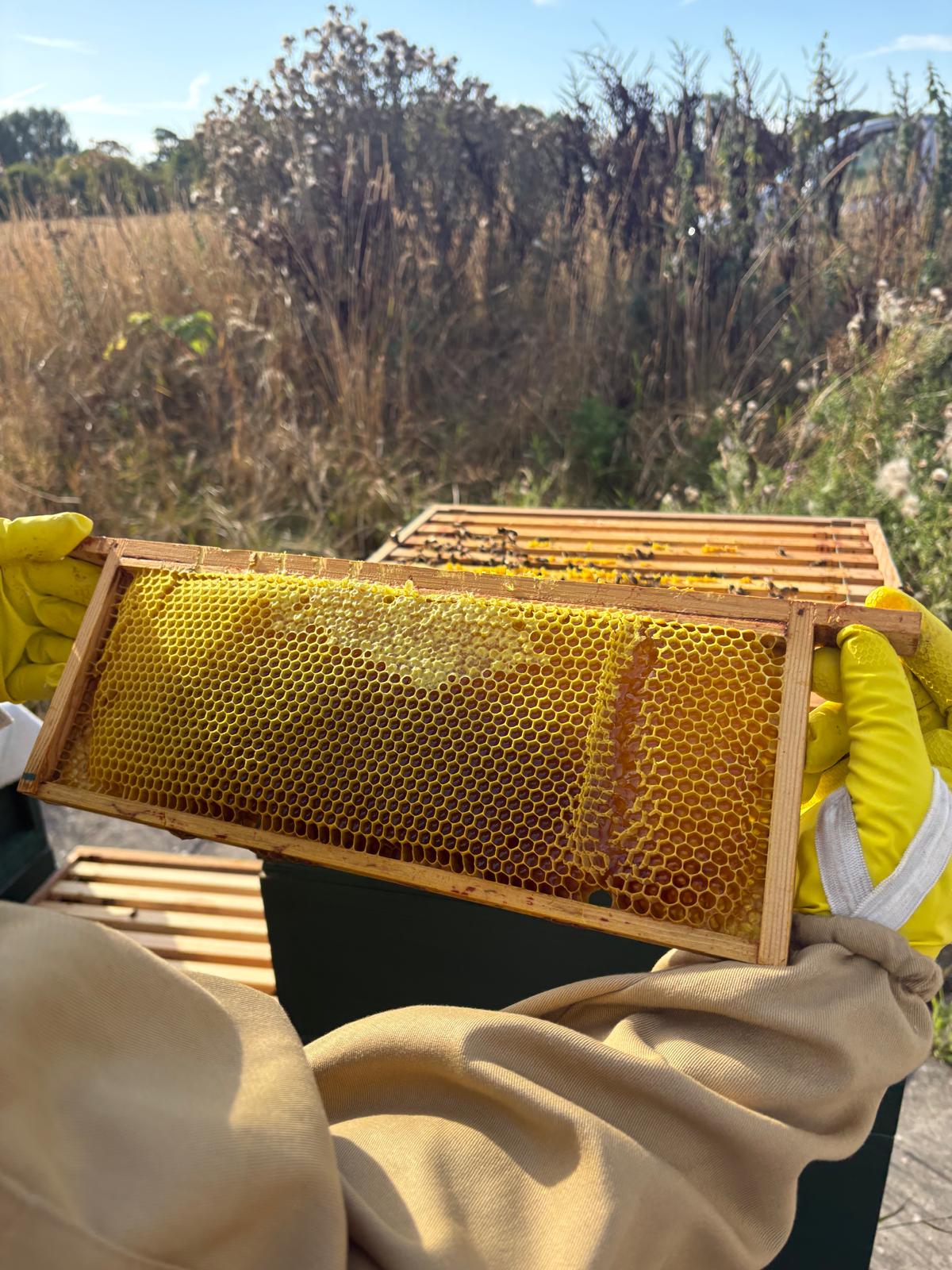
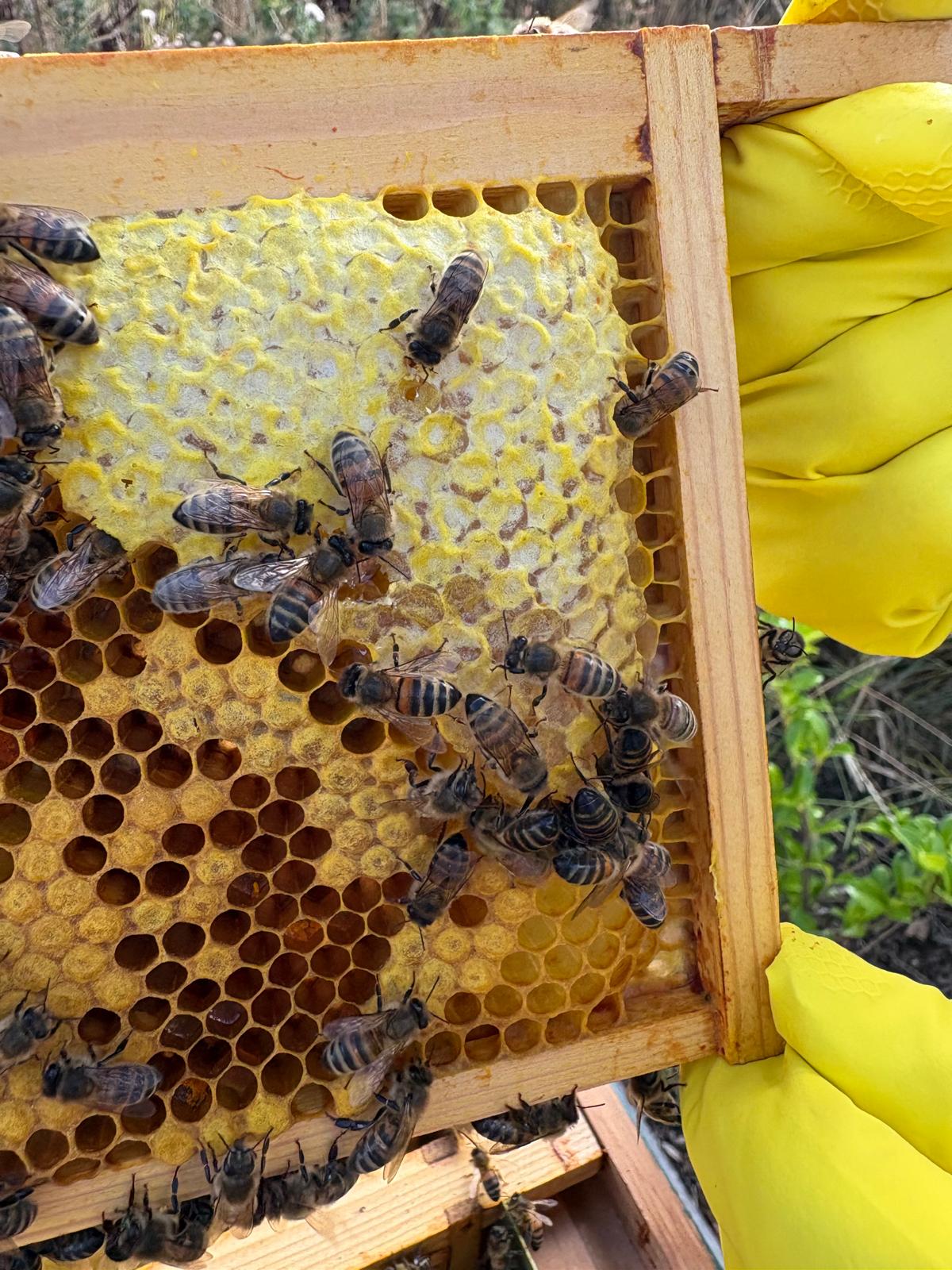
We transferred two frames of capped brood from the brood box of our larger, stronger hive across to the smaller colony.
What Is Equalising?
The process of moving brood between colonies is known as equalising.
Capped brood contains developing bees that are close to emerging. By transferring these frames into the weaker colony, we can give it an immediate boost in numbers as those young bees emerge and join the workforce.
It also has a benefit for the stronger colony. Removing some of the brood can help to reduce congestion within the hive, giving the colony a little more space and potentially reducing some of the pressure that can contribute to swarming.
In other words, it’s a way of balancing the two colonies — helping the smaller hive to build up while also giving the stronger hive a little more room.
Looking Ahead to Winter
Although winter still feels a little way off, this is an important time of year for thinking ahead.
The aim is to make sure both colonies have enough healthy bees, adequate food stores and a strong queen before the weather turns colder. The smaller hive in particular needs to continue building its strength over the coming weeks.
For now, we’ll continue keeping a close eye on both colonies, watching how they respond to the extra brood, monitoring their food supplies and making sure they have access to water and forage wherever possible.
It’s been a challenging summer for the bees, particularly with the heat and the reduction in wildflowers, but both queens are now safely accounted for and we’re doing what we can to give both colonies the best possible start to the journey towards winter.